

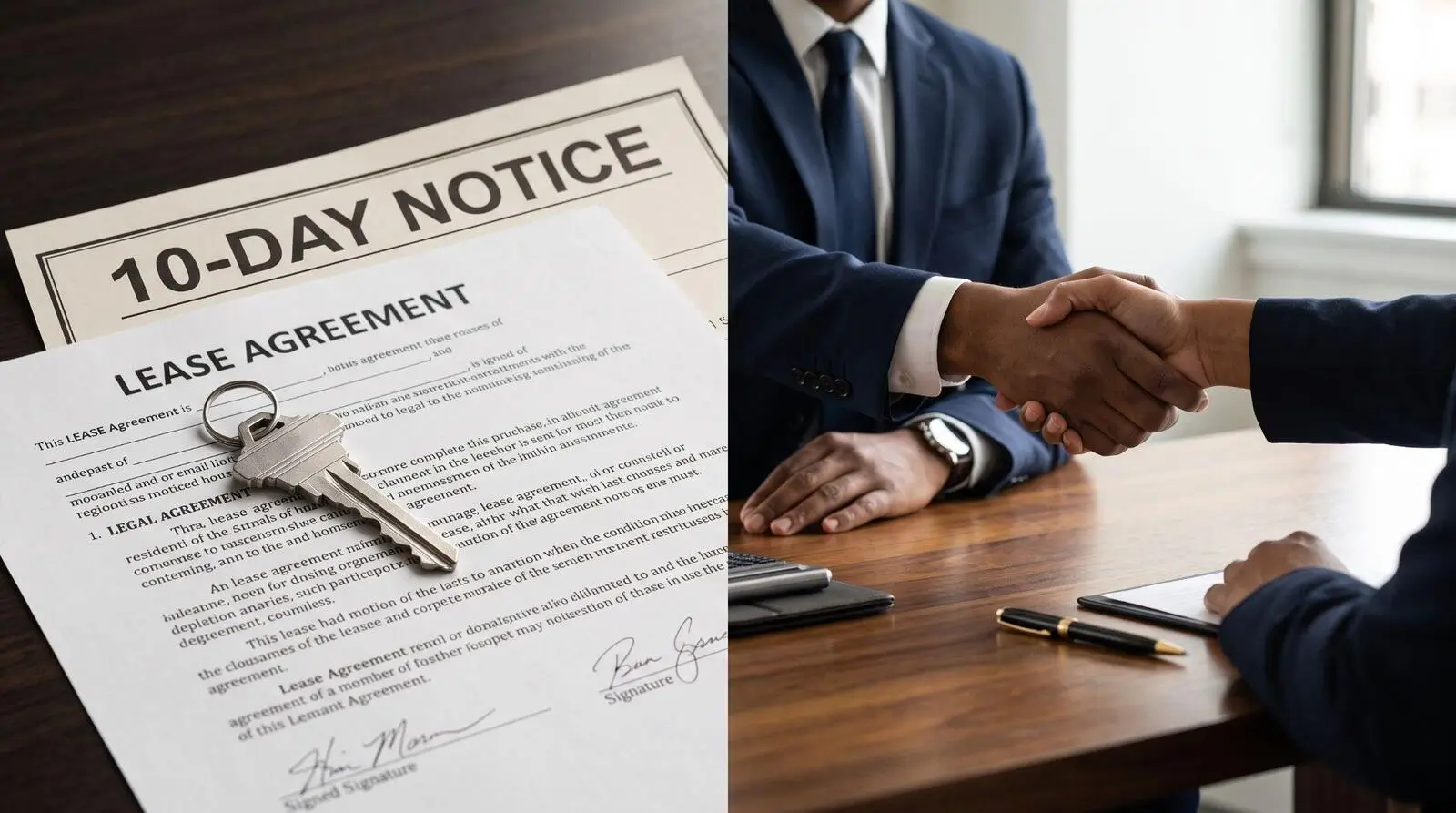
The weeks between Thanksgiving and New Year's are expensive for everyone, including your tenants. Travel, gifts, and higher heating bills can stretch a household budget, and a missed December rent payment is not unusual.
When it happens, you have a choice: work out a payment plan or start the eviction process. Neither option is always right. Here is how to weigh them under Indiana law so you protect both your income and your property.
Key Takeaways
- Indiana law allows a landlord to terminate a lease for nonpayment with at least 10 days' written notice, unless the tenant pays in full first or the parties agreed otherwise.
- Indiana has no statewide cap on late fees, but your lease terms still control what you can charge.
- A written payment plan can recover rent faster and cheaper than eviction for a tenant with a good history.
- Eviction may be the better path when a tenant has repeated late payments or stops communicating.
- Consistency and documentation protect you no matter which option you choose.
What Indiana Law Says About Late Rent
Under Indiana Code 32-31-1-6, if a tenant does not pay rent when due, a landlord may terminate the lease with at least 10 days' notice. The termination does not apply if the parties agreed otherwise or if the tenant pays the rent in full before the notice period ends.
Indiana does not set a statewide grace period or a statewide dollar cap on residential late fees. Your lease sets those terms, and IC 32-31-1-20 generally limits local governments from regulating landlord fees. Always follow your lease exactly, because courts look closely at whether notices and charges match it.
When a Payment Plan Makes Sense
A payment plan can work well when the tenant has a solid payment history and a clear, short-term reason for falling behind. A seasonal job gap, a medical bill, or a holiday expense can fit this pattern.
- The tenant contacted you early and explained the situation
- They have paid on time for most or all of their lease
- They can show a realistic source of income to catch up
- The amount owed can be repaid within one to three months
Put every plan in writing, with specific amounts and due dates, and have both parties sign it. Your lease or the agreement should state that accepting partial payments does not waive your right to enforce the lease if the plan is broken. Ask an Indiana attorney to review your template.
When Eviction May Be the Better Path
Payment plans do not fix every situation. Eviction may be the more responsible choice for both sides when late payments are a pattern, not a one-time event.
- The tenant has missed or broken prior payment plans
- They stop responding to calls, texts, or letters
- The amount owed is growing faster than they can repay it
- There are lease violations beyond late rent
Some Indiana courts offer settlement conferences or eviction diversion programs that pause a case while both sides negotiate. Ask your county court clerk what is available before or after filing, since programs vary by county. Local court information is available through the Indiana Judicial Branch.
Why the Holidays Need a Clear Policy
December brings a unique mix of pressures. Heating costs rise as temperatures drop, some seasonal or hourly workers see fewer shifts, and courts and offices may have holiday schedules that slow down the eviction process.
Deciding your approach in November, before the first missed payment, helps you respond calmly and consistently. Write down when you will send notices, what you need to see before offering a plan, and who on your team will handle tenant conversations.
A Hypothetical Cost Comparison
Hypothetical example for illustration only. Imagine a Carmel home renting for $1,800 per month, and the tenant is one month behind in December.
- Payment plan: The tenant pays the December balance in three extra payments of $600 from January through March. If the plan holds, you recover the full $1,800 and keep a tenant in place.
- Eviction: Court filing costs, legal fees, several weeks of the process, one month or more of vacancy, and turnover repairs could easily cost more than the $1,800 owed, depending on the case and the property.
The math often favors a well-structured plan for a reliable tenant. It usually does not favor a plan for a tenant who is unlikely to follow it, because that just delays the same outcome.
Tips for Handling Holiday Late Rent
- Remind tenants in early November about due dates and online rent payment options.
- Respond to late payments right away and in writing.
- Apply the same policy to every tenant to support fair housing compliance.
- Keep a record of every communication, payment, and agreement.
- Point tenants to local rental assistance resources when available.
Frequently Asked Questions
How much notice does an Indiana landlord have to give for unpaid rent?
Under IC 32-31-1-6, at least 10 days' written notice, unless the lease says otherwise or the tenant pays the full amount before the notice period ends.
Does accepting partial rent stop an eviction in Indiana?
It can affect your case depending on your lease and how the payment is handled. Use clear written terms and speak with an attorney before accepting partial payment during an eviction.
Is there a limit on late fees in Indiana?
There is no statewide dollar or percentage cap. Late fees must follow your lease, and a court may still review whether a fee is reasonable.
Should I offer payment plans to every tenant?
You do not have to, but you should use consistent written criteria. Offering plans to some tenants and not others without a clear reason can create fair housing risk.
Protect Your Income Through the Holidays
Late rent in December does not have to become a crisis. With clear lease terms, fast communication, and a consistent policy, many situations can be resolved before they reach a courtroom.
A Step Ahead Management helps Indianapolis and Carmel owners handle rent collection, tenant communication, and difficult conversations with care. Explore our Indianapolis property management services or contact our team for a free consultation. Our tenant screening process also helps reduce late payments from the start.